Stephanie Huerta (1968–2017)
Stephanie Huerta (1968–2017) was a Santa Fe artist whose work encompassed sculpture, painting and printmaking. Raised in West Nyack, New York, she graduated from the Ringling School of Art and Design in 1989, receiving the “Best of Ringling” President’s Award. Her career included scenic work for Universal Studios and Nickelodeon Studios, museum installations and public art commissions. Working in bronze, steel, plaster/cement and oil paint, she drew inspiration from animals, environmental concerns and the harmony of nature, capturing the spirit and beauty of living forms.
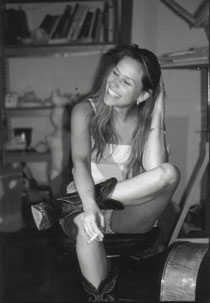
Stephanie Huerta (1968–2017) was born and raised in West Nyack, New York. She later relocated to Sarasota, Florida, where she studied sculpture, painting and printmaking at the Ringling School of Art and Design. Upon graduating in 1989, she received the “Best of Ringling” President’s Award.
In Florida, Huerta worked as a freelance sculptor and Chief Scenic Artist for Universal Studios and Nickelodeon Studios. Ripley’s Believe It or Not commissioned her to sculpt a bust of Kevin Costner. Her work for the Nassal Company included a maquette for a 25-foot-tall King Neptune installation at Caesars Palace in Las Vegas, as well as a life-sized coral reef and Greek village for the Journey to Atlantis exhibit at SeaWorld.
Huerta subsequently made her home and studio in Santa Fe, New Mexico. Her commissioned work included sculptures for Highlands University in Las Vegas, New Mexico, and a life-sized sculpture for the Pioneers Museum honoring the first formerly enslaved person to serve on a jury in Colorado Springs, Colorado. Her projects ranged from bas-relief portraits for the College Football Hall of Fame to life-sized horses for the Witte Museum of Texas. She also received a commission through New Mexico’s Art in Public Places program to create a permanent sculpture at the entrance to Tingley Coliseum at the New Mexico State Fairgrounds.
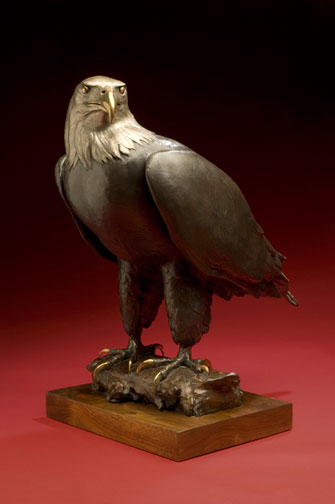
Her fine art ranged from large-scale oil paintings to figurative and expressionistic sculptures in bronze, steel and plaster/cement. Environmental concerns and a love of harmony in nature shaped her artistic vision. Animals were a central theme, carrying layers of symbolic and historical meaning while expressing her fascination with anatomy and the beauty of life.
Across these varied materials and subjects, Huerta sought to capture a distinctive spirit. Her paintings and sculptures conveyed vitality, character and an enduring affection for the natural world.
Showing the single result